

From dress codes to diplomacy: How the Opposition risks walking into BJP’s script
Reactive politics: The Opposition’s strategic blind spot
From dress codes to diplomacy: How the Opposition risks walking into BJP’s script

As electoral temperatures begin to rise ahead of crucial Assembly elections in Tamil Nadu, West Bengal, Kerala, and Assam, a familiar pattern appears to be re-emerging in India’s political theatre. The ruling Bharatiya Janata Party (BJP) seems to be setting the narrative agenda, while sections of the opposition risk responding in ways that reinforce, rather than challenge, that agenda.
The BJP’s political strategy has often relied on framing issues in a manner that places the opposition in a reactive mode. Whether it is nationalism, governance optics, or questions of propriety, the party has demonstrated an ability to create situations where opposition responses, however justified they may seem, end up serving the ruling party’s broader messaging.
Take, for instance, the recent decision by the government to convene an all-party meeting on the Iran situation. On the face of it, such a move signals inclusivity and a willingness to build consensus on foreign policy—an area traditionally kept above partisan politics. However, the simultaneous emphasis on a “strict dress code” subtly shifts the discourse from substance to symbolism.
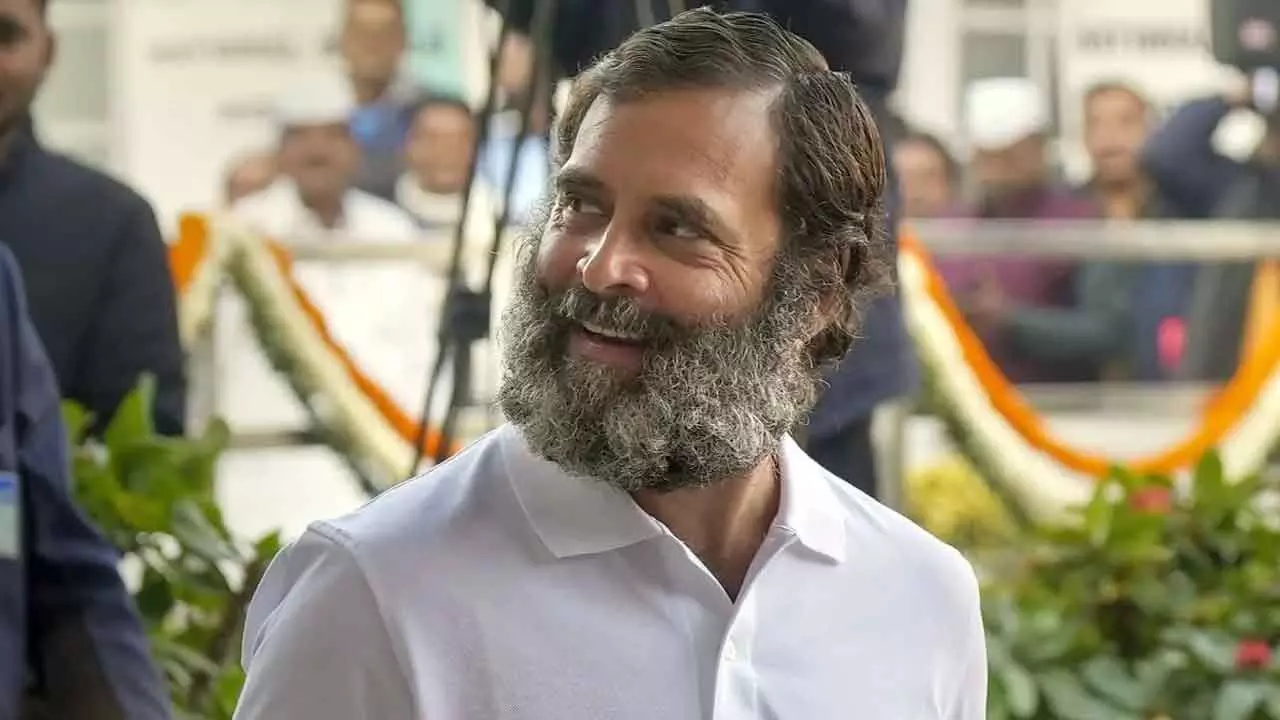
The reference, widely interpreted as being directed at Rahul Gandhi, the Leader of the Opposition, is not accidental. Gandhi’s sartorial choices—T-shirts, sometimes paired with chappals—have long been projected by the BJP and its ecosystem as indicative of casualness or a lack of seriousness. His informal moments, such as sipping tea on the steps of Parliament, are amplified to contrast with the BJP’s projection of discipline and institutional respect.Dress code for Parliament or state legislatures and official meetings is certainly a must as they are not anybody’s private lounge.
The trap here is evident. If the opposition reacts indignantly to such cues, it risks diverting attention from the substantive issue—the Iran crisis—and instead fuels a narrative centred on decorum, nationalism, and institutional propriety. If it ignores the provocation, it risks allowing the BJP’s framing to go uncontested. Either way, the ruling party succeeds in setting the terms of engagement.
A similar dynamic is visible in the controversy surrounding the eviction notice to the Indian National Congress (INC) regarding its long-standing office at 24 Akbar Road. The government’s move, justified on administrative or legal grounds, comes at a politically sensitive time. The Congress, which now has a new, modern headquarters, is likely to portray the eviction as vindictive politics—an attempt to erase institutional memory and humiliate a historic party.
Yet, here too, the BJP may be calculating the optics differently. By triggering a reaction from the Congress, it reinforces its narrative of a party unwilling to move on, clinging to legacy privileges who are interested in land grabbing. The Congress’s emotional or rhetorical pushback, while understandable, risks playing into a storyline that contrasts “new India” with “entitled old politics.”
The recent remarks by Akhilesh Yadav add another dimension to this unfolding narrative. His allegation that the government was indulging in “fakery” and that “no ships have come” in the context of the Iran situation reflects a deeper scepticism within opposition ranks about the government’s claims. However, such statements, if not backed by clear evidence or framed with caution, can be portrayed by the BJP as irresponsible or even anti-national, particularly when linked to sensitive international developments.
This again highlights a recurring challenge for the opposition: how to critique the government effectively without appearing dismissive of national concerns. In an era of hyper-communication and rapid narrative shifts, even a loosely worded comment can be weaponised.
The BJP’s advantage lies not merely in its organisational strength or electoral machinery, but in its narrative discipline. It chooses battlegrounds carefully—often preferring terrain where symbolism, perception, and emotional resonance outweigh granular policy debates. Issues such as dress code, institutional propriety, and national security are not accidental choices; they are designed to elicit predictable reactions.
For the opposition, particularly in states like Tamil Nadu, West Bengal, Kerala, and Assam, where regional dynamics are complex and local issues dominate, falling into this national narrative traps can be costly. These states have distinct political cultures and priorities—ranging from federal autonomy and linguistic identity to welfare politics and regional pride. Allowing the discourse to be hijacked by centrally framed symbolic issues risks diluting the opposition’s ability to connect with local electorates.
In Tamil Nadu, for example, Dravidian politics has historically resisted northern impositions and emphasised social justice and regional identity. In West Bengal, political mobilisation often hinges on cultural assertion and grassroots organisation. Kerala’s electorate is deeply engaged with policy debates and governance metrics, while Assam’s politics is shaped by identity, migration, and development concerns. A one-size-fits-all national narrative rarely resonates uniformly across these states.
Yet, if opposition parties continue to respond reactively to BJP’s provocations, they risk losing control over their own messaging. Instead of setting the agenda on issues such as unemployment, inflation, federalism, and social welfare, they may find themselves entangled in debates over dress codes, office spaces, and rhetorical exchanges.
This is not to suggest that the opposition should remain silent or avoid confrontation. On the contrary, robust critique is essential in a democratic framework. However, the effectiveness of that critique depends on strategic calibration. Responses must be measured, evidence-based, and anchored in issues that matter to the electorate.
The larger question, therefore, is whether the opposition can shift from a reactive to a proactive mode. Can it anticipate narrative traps and refuse to be drawn into them? Can it reframe debates in a manner that foregrounds governance and public interest rather than symbolism?
Amidst this scenario, the AIMIM has joined hands with the controversial muslim leaderHumayun Kabir's Aam Janata Unnayan Party (AJUP). Neither of them have any chance of winning seats but the question that needs to be seen is whose vote bank will they impact?
Elections are not merely contests of numbers; they are battles of perception, narrative, and timing. The opposition needs to recognise the pattern and adapt accordingly.
As the political clock ticks towards the Assembly polls, the stakes are high. If the opposition fails to recalibrate its approach, it risks amplifying the very narratives it seeks to counter. In politics, as in strategy, the most effective move is often not the most immediate reaction—but the one that changes the terms of the game altogether.
(The author is a former Chief Editor at The Hans India)





